Dear Family and Friends,
We would like to thank everyone who made this incredible trip possible.
Sarah and Masa
If you want to check out our itenerary, please visit the following website:
Lima-Cuzco-Machu Picchu:
http://www.gadventures.com/trip_details/PIM/2012/
Nazca Lines:
http://www.gadventures.com/trip_details/TSPNLN/2012/
Saturday, July 21st
Turned on the TV this morning to find a travel show all about Lima.
Bumped into two of our favorite neighbors Katie and Craig. Having lunch
in the Delta lounge, about to board, up up and away PERU here we come!!!
We arrived at the hotel around 1am. Dropped our stuff and went
out for a drink around Park Kennedy in Miraflores. It's a really fun,
lively neighborhood. There are two 24/7 grocery stores near our hotel.
LIMA- city of kings
G Adventures description
"Peru is
frequently referred to as the 'Land of the Incas'. It is true that the
Incas formed the greatest empire on the continent and left mysterious
cities such as Machu Picchu. However, it is important to remember that
the Incas were the only the last in a long series of Peruvian
civilizations spanning several thousand years and the ruins of many of
these earlier civilizations can also be visited. Peru is made up of
three main geographical areas: the Andes, the Amazon and the desert
coastal area. In this trip we concentrate on the Andes region of
south-central Peru and the ancient Inca capital of Cuzco.
Known
as the City of Kings, Peru’s capital city Lima was founded by Francisco
Pizarro on the Day of the Three Kings (Epiphany) in 1535. The Plaza de
Armas is the heart of old Lima, and it is here you find the Cathedral,
Government Palace and Archbishop’s Palace. The Cathedral dates back to
the 1700s and houses the remains of the conquistador Pizarro. To get a
feel for colonial Lima, take a cab to the Plaza de Armas and watch the
changing of the Palace Guard in the afternoon. Walk the streets
surrounding the Jirón de la Unión for great examples of Spanish-colonial
architecture and to get a taste for life in a large South American
city. An optional city tour visits many of the city’s highlights.
There
are many fine museums in and around the city, including the Museo
Rafael Larco Herrera, which houses an equally impressive collection of
pottery, mummies and textiles from the Paracas and Nazca cultures. The
more affluent districts of Miraflores, Barranco and San Isidro, which
are on the coast, offer good nightlife and cafés all within walking
distance. Limeños (Lima’s residents) are friendly, and the city is
filled with excellent restaurants; seafood lovers in particular should
be sure to try a ceviche, for which Lima is well known. "
Sunday, July 22nd
We had a nice breakfast at the hotel, then walked down to the Parque del Amor. The coastline promenade is beautiful and very dramatic with the steep cliffs. We walked around the modern Larco Mar - shopping/ restaurant area. We got back to Park Kennedy for ceviche and seafood rice outdoor lunch and the Pre independence day parade. We got back for our first g adventure briefing. It finished just in time for some spectacular fireworks. We walked to Huaca - the old pyramids that are about 20 minutes from our hotel on foot. We got some sandwiches at a popular local place around the park. We ate at the hotel and then Maurice picked us up and gave us a tour around San Isidro (sunny sidro) and down by the water.
 |
| nice hat Masa |
 |
| Parque del Amor |
 |
| Larco Mar shopping center |
 |
| ceviche |
 |
| Independence Day parade |
 |
| Huaca pyramids |
Monday, July 23rd
We left the hotel around 8:30am for the airport. We met a family that was also on our tour. We flew to Cuzco with Taca air at 11:30. Arrived around 1pm, slightly delayed. Arrived at Prisma Hotel. Javier gave us a great 2 hour tour of Cuzco stopping by the market to try local passion fruit and bread. We saw the cathedral, Masa and I visited for 10 minutes. Statue of inka king transformer pachaquchek. Spaniards came 1533. We returned to the hotel around 4pm. I took a nap and Masa packed. At 5:30pm we had our second G adventure briefing. We went to dinner at Cicciono an adorable restaurant behind the cathedral recommended by Hannah. We also visited the courtyard of a five star hotel recommended by Shoko. We got back to the hotel at 9:30pm. Masa fell asleep right away.
CUZCO
G Adventures description
"Cuzco
is the continent’s oldest continuously inhabited city, and the hub of
the South American travel network. The city attracts travellers who come
not just to visit a unique destination but also to experience an
age-old culture very different from their 20th century way of life; one
could easily spend a week just in and around the area. Inca-built stone
walls line most of the central streets and you don't have to go far to
see other major Inca ruins. It is a city steeped in history, tradition
and legend.
Every year Cuzco attracts thousands of
travellers who come to delve into its noble but tragic past. It is the
perfect base for optional explorations around the city and area as well
as a range of outdoor activities. Relax and explore this fascinating
city, and take time to acclimatize to the high altitude.
Cuzco
is considered the mecca of Peru and rightly so. This beautiful colonial
town offers much to the visitor with its nearby ruins, cobble-stoned
streets, museums, churches and lively atmosphere. Among the more
adventurous optional activities available in Cuzco are: horseback riding
around archaeological sites such as Sacsayhuaman, Tambo Machay and Puca
Pucara; white water rafting on the Urubamba River; and mountain biking
down to the Sacred Valley, perhaps visiting an Inca ruin along the way.
Cuzco’s
numerous colonial churches are one of the city’s most common sights.
The Cathedral was started in 1559 and took 100 years to build; it is
also one of the city’s greatest repositories of colonial art.
Immediately in front of the entrance is a vault containing the remains
of the famous Inca historian, Garcilaso de la Vega. Also worth visiting
are the churches of La Compañía, La Merced and San Francisco.
While
most ruins are just outside of the city, the main ruin within is that
of the Coricancha, once the Inca Empire's richest temple. Today the ruin
forms the base of the colonial church of Santo Domingo. During Inca
times this temple was literally covered with gold, but within months of
the arrival of the first conquistadors this incredible wealth had all
been melted down. It is left to the individual imagination to envision
the magnificence of the original structure.
There are
several good museums in Cuzco, including the Archaeological Museum,
which also houses a small art museum, the Regional History Museum and
the Religious Art Museum. Our best advice for exploring Cuzco is to wear
a comfortable pair of shoes, arm yourself with a city map and set off
to explore!
"
Tuesday, July 24th
SACRED VALLEY/Ollantaytambo
G Adventures
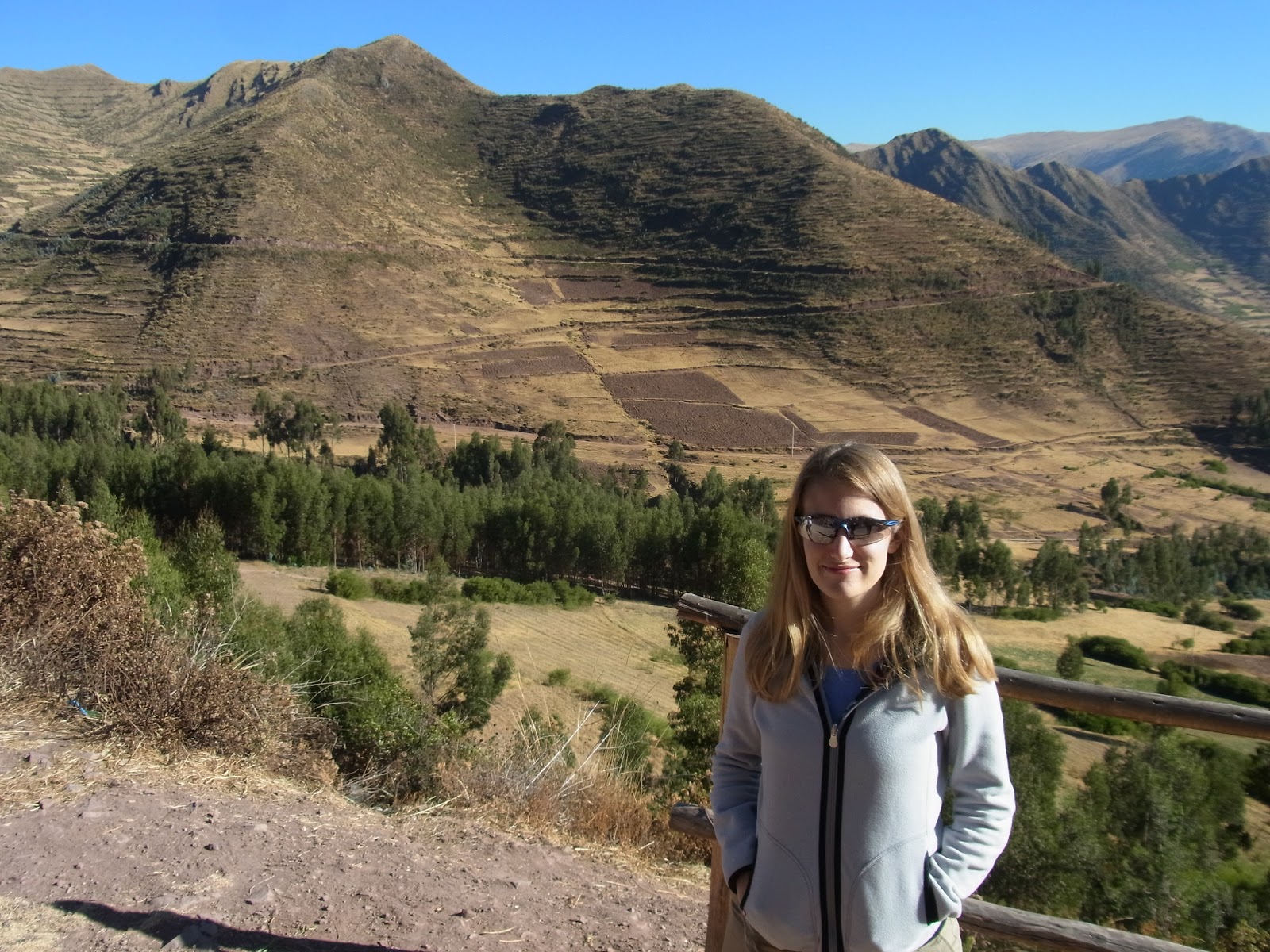
description "Travel with our local guide through the Sacred Valley of
the Incas. An important source of food for the Inca, the Sacred Valley
is a lush agricultural region that continues to supply the city of Cuzco
with much of its produce. Visit the impressive Pisac ruins and the
colourful artisan market (market days only). The day trip finishes in
the picturesque village of Ollantaytambo, site of another large Inca
ruin. Here we catch our breath and prepare for the hike ahead.
Ollantaytambo
is your first taste of what lies ahead on the Inca Trail. The town and
fortress of Ollantaytambo are strategically situated overlooking the
beautiful Urubamba River Valley. This major ruin site is known as the
best surviving example of Inca urban planning and engineering. It is
admired for its huge steep terraces guarding the Inca Fortress and for
being one of the few places where the Spanish lost a major battle during
the conquest. We spend the night in this small town before heading out
for the start of the hike the next morning."
Sacsayhuaman: Royal house of the sun. Solstice festival June 20. Some lime blocks 60 kg. Cuzco used to be a lake. People give offers to the snow capped mountains because they believe these are gods. Different ecosystems, vertical economy (farming).
 |
| Christi Blanco at 3600 meters |
Animal shelter: 3 condors, macao, llama, 7 animals.
Cacacolia project planeterra where women produce textiles and by
donating 5 soles for water at the hotel. I like the social projects that
g adventure supports.
 |
| I made a new friend |
 |
| all natural |
 |
| we finally found a hat that was big enough for Masa's head |
Next stop Pisac 1 hr hike, 3 functions for terraces: 1) agriculture 2) erosion prevention 3) ornamental
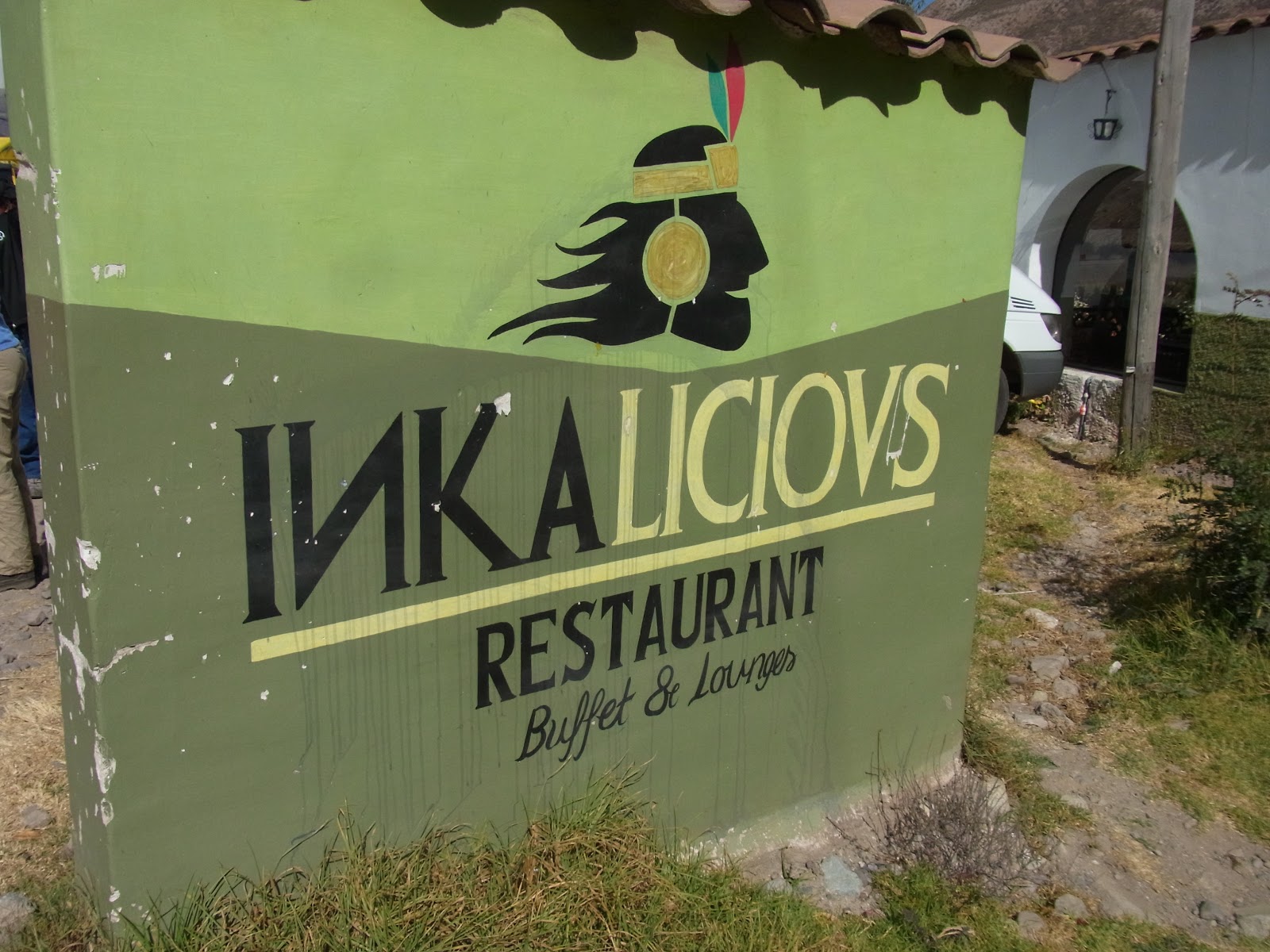
Drove an hour to Urumbamba. Had a buffet lunch at Inkalicious.
 |
| teacher strikes demanding more pay |
We dropped our stuff off at our hotel in Ollantaytambo, rested for 45 minutes. At 4pm we went on a tour of the sun temple and other inka sites. We're having dinner at Blue Puppies on the main square. Went to sleep at 9:00pm.
Wednesday, July 25th
Met our leaders Julio and Jesus. Drove from Ollaytantambo to Piskacucuchu 45 minutes by van checkpoint inka trail.
 |
| snow-capped Veronica at 5700 meters |
G Adventures description
"The 4-day Inca Trail to Machu Picchu
is physically challenging but worthwhile, and the excursion is within
the ability of most reasonably fit. It is a 44-km (27 mile) hike, with 3
high passes to be crossed, one of which reaches an elevation of 4200m
(13776 ft). The trail is often steep, and it may rain even during the
dry season. The temperatures at night may fall below zero, so it is
important to come prepared.
Depart Ollantaytambo for
km 82 where we begin our walk in the footsteps of the Incas. Our local
crew of porters, cook and guide look after us well for the duration of
the hike. Porters carry the majority of the gear for the hike, so those
passengers doing the hike only carry a small daypack with water, rain
gear, snacks, a camera, etc. As you walk the trail that linked this
ancient empire, admire breathtaking views at every step as we move from
high plateau areas to dense cloud forest. Depending on the season, you
may see a great variety of flora, including miniature and large orchids,
and fiery rhododendron bushes.
You pass several
smaller ruin sites, the first of which is Llactapata. The second day
climb the long steep path to Warmiwañusca, or Dead Woman’s Pass. At 4198
m (13769 ft) above sea level, this pass is the highest point of the
trek. The second pass of the hike is at 3998 m (13113 ft) where on clear
days, we enjoy superb views of the snow-capped Cordillera Vilcabamba.
The trail goes through some beautiful cloud forest on the gentle climb
to the third pass, where you will walk through a causeway and a tunnel,
both original Inca constructions. The highest point of the third pass is
at 3700m (12136 ft). On clear days you are rewarded for all this work
with beautiful views of the Urubamba Valley below. Soon you reach the
serene ruins of Phuyupatamarca, or the 'Town above the Clouds', at about
3650 m (11972 ft) above sea level. We will camp either here or an hour
and a half further along close to Wiñay Wayna (Forever Young) ruins, a
grandiose terraced hillside site, with panoramic views of the valley
below and just a short hike from Machu Picchu.
On the
final day of the hike we climb the steps to the Sun Gate overlooking the
peaks that surround Machu Picchu. When the morning is clear, there is
no way to describe the feeling of the first views of Machu Picchu, as
the mist rises off the mountains early in the morning and the famous
site appears in front of you.
Machu Picchu is both the
best and the least known of the Inca ruins. It is not mentioned in any
of the chronicles of the Spanish conquistadors and archaeologists today
can do no more than speculate on its function. The local Quechua farmers
in the area knew of Machu Picchu for centuries, but it was not until an
11-year-old boy led the American historian Hiram Bingham (who was in
search of Vilcabamba) to the site on July 24, 1911, that the rest of the
world became aware of its existence. At that time the site was covered
in thick vegetation, and Bingham and his team returned in 1912 and 1915
to clear the growth. Over the years, much work has been done on
excavating and studying the site. Despite these efforts, many unanswered
questions remain.
Distances of the Inca trail:
Day 1 Km 82 to Wayllambama
Approximate distance: 11 km
Estimated hiking time: 5-6 hrs
Day 2 Wayllabamba to Paqaymayo
Approximate distance: 12 km
Estimated hiking time: 6-7 hrs
Day 3 Paqaymayo to Wiñaywayna
Approximate distance: 16 km
Estimated hiking time: 8 hrs
Day 4
Wiñaywayna to Intipunku (Sun Gate)
Approximate distance: 4 km
Estimated hiking time: 1.5 hrs
Intipunku to Machu Picchu
Approximate distance: 1.5 km
Estimated hiking time: 45 min
"
3 hrs to llactapata, Hatunchaca lunch&siesta
1-1 1/2hrs to Wayllambamba camp, arrival around 3:30pm, 5pm tea time, played asshole, 6:50pm dinner and briefing
Thursday, July 26
12km
5:30am wake up, coca tea, 1hr pack
6:10am breakfast
Hike 9km to 4215 meters Dead Woman's pass (up 1200 meters)
1hr, 2hrs, 2hrs
Down 3km (600 meter altitude) 2 hrs to paqaymayo camp
Arrival at 2/3pm free afternoon.
My knees hurt so bad. Took an ibuprofen and rubbed voltaren on it.
5:20pm tea time
Played asshole
6:50pm dinner/ briefing
Friday, July 27
special pancake breakfast
16km beautiful sites, Runkaraqay
First inca site fortress or lodge after 45 minutes
Network. Pachaqutek transformer Cuzco at center. 40000 paths in all directions, long special ones for messengers. nobility, short ones for local peasants. To south Chile, Bolivia, 97%original trail,
cloud forest,≈
 |
| original trail |
 |
| cloud forest |
 |
| amazing over 8 different foods at 16km beautiful sites, Runkaraqay Pass 3600 meters |
one of my favorite spots, at the terraces
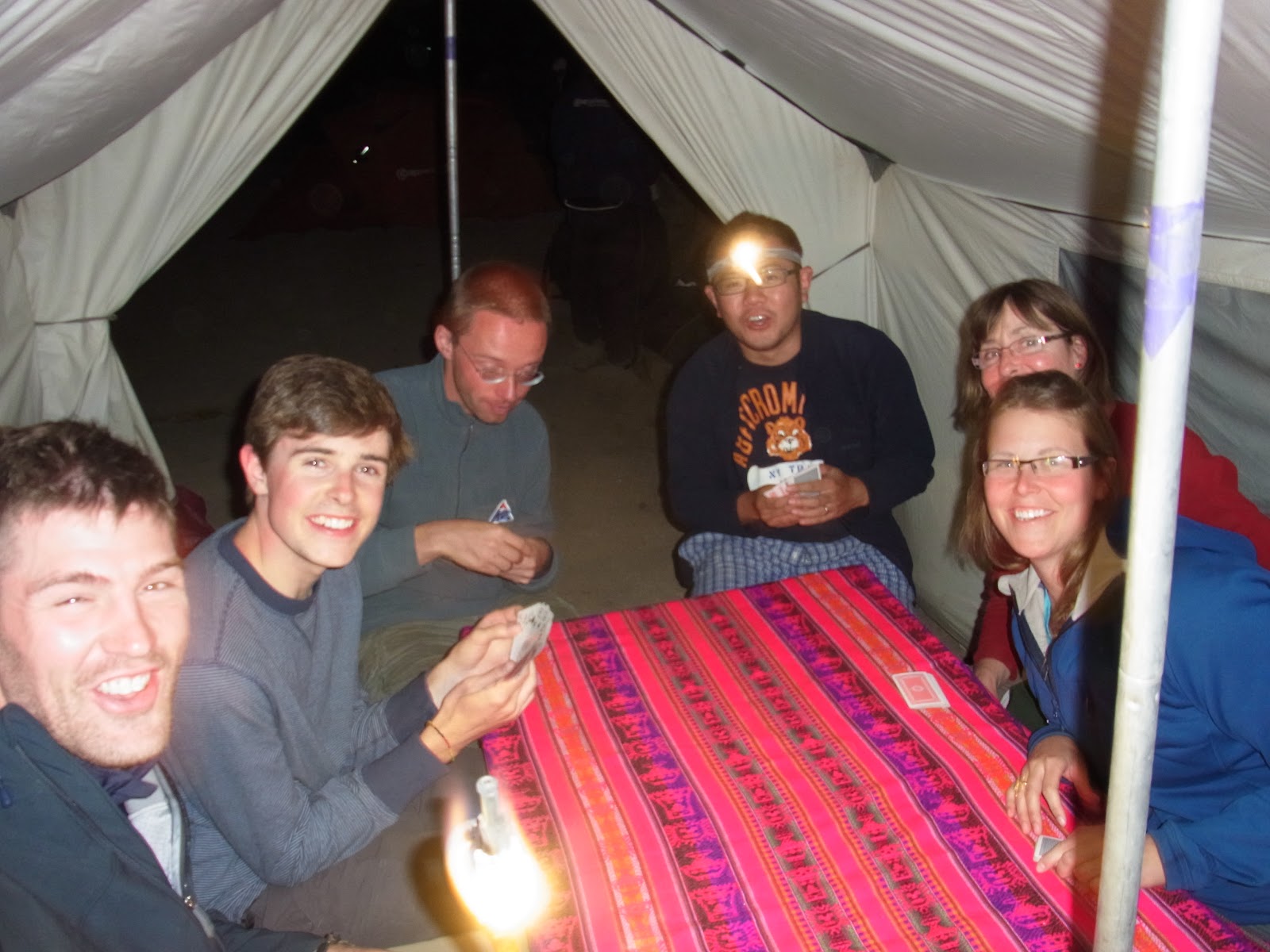 |
| more asshole |
Saturday, July 28
3:45am get up
4am breakfast
4:30am leave campsite
5:30am last check opens
Intipunka - sun gate (panorama view) 2700meters
6:45/7:10am sun beams
1 hr to Macu Picchu, hike outside,
8:00 break 20 minutes snacks/toilets
8:30 2hr walking tour. 3 hrs of free time in Machu Picchu. 800 ppl used to live there. (check blue map for names of famous places) Bus tickets
1:30 lunch in Aquas Calientes pick up duffles
2:55pm train from Aquas Calientes touristy hot spring town
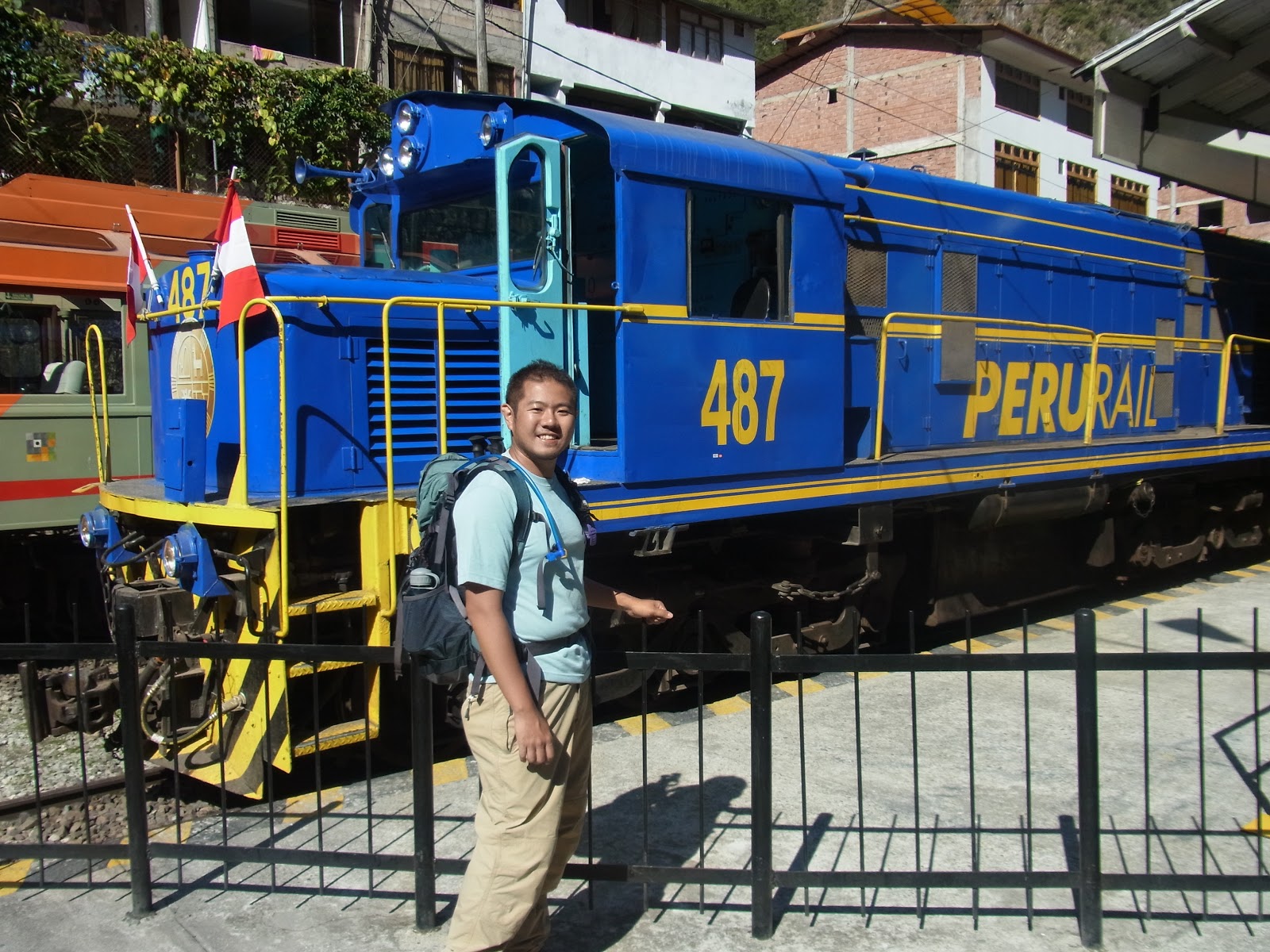
1hr 45 minutes to Ollant. By train, slow cute, swaying back and forth along the Urubamba. It reminded us of the Goldenpass train in Switzerland.
1hr 40 min to Cuzco (bus) beautiful sunset, crazy fast driving, overtook all other buses and cars. We went to Marcel Batata for dinner, which has an adorable terrace overlooking Cuzco by night. Then we went to Mythology, a lively bar with lots of salsa dancing. Masa and I led most of our group back at midnight. Stayed at Prisma hotel.
 |
| we made it |
 |
| anniversary card |
 |
| sacred rock |
 |
| group picture |
 |
| Temple of the Sun |
 |
| alpaca I think |
 |
| pecan apple |
 |
| guinea pig, a national dish |
 |
| we did it, now let's celebrate! |
 |
| dancing |
Sunday, July 29
We met the girls for breakfast at 9am, delicious buffet. Masa and I took one more walk around Cuzco stopping by San Pedro market, where we bought some Maras salt for Masa's mom. We also visited the Temple of the sun. We got picked up at 11:15 and our flight to Lima was at 13:15. We arrived back at the Hotel Castellana at 15:30, did laundry just down the street. We got our briefing from Miro at 17:50. Then we took a taxi to the night fountains in the Park Reserva, recommended by Taryn. It was really crowded because of Independence Day, but beautiful! Back in Miraflores we met up with Maurice and his girlfriend who took us to an old, beautiful hotel with the best pisco sours. At midnight we celebrated our first wedding anniversary.
 |
| on a mission to find sal de maras for Masa's mom |
 |
| back at La Castellana in Lima |
Park Reserva
 |
| best pisco sours in Lima |
 |
| Happy 1st anniversary! |
Monday, July 30
Slept in and walked to Larcomar. Got picked up by Miro and Lorenzo at 12:30. Took the Cruz del Sur bus to Nazca (7hours). Had lomo salta do dinner at Rico Pollo.
G Adventures description
"This morning take a city tour of
Nazca, followed by a fascinating visit to the Pre-Inca desert cemetery
site of Chauchila, with 1500 year-old mummies, bones and pottery on the
desert floor. The tour also includes a visit to an artisan's workshop,
where modern masters create Nazca style pottery, and a traditional
gold-mining centre. This entire desert area was once the home for the
ancient Paracas and the Nazca cultures, which preceded the Incas by more
than half a millennium. In the late afternoon take an included flight
over the mysterious Nazca Lines. Overnight in Nazca.
The
Nazca Lines are one of the world's greatest archaeological mysteries.
The lines consist of patterns and pictures etched in the ground,
crisscrossing a wide area of flat desert. Some lines measure up to 10 km
(7.5 miles) in length, and yet remain perfectly straight. The
depictions of birds, insects and animals are only recognizable from the
air. Who drew the lines, and why, is something modern archaeologists can
only theorize about, but current beliefs suggest that they may be part
of complex agricultural calendar. From the ground we can make out very
little, and the best view is from our light aircraft, from where we get a
panoramic view."
Tuesday, July 31
Were met at the hotel at 9am, had to wait at the airport for 2 hours flew over the lines, 2000 years old. Amazing. Took a short siesta. Walked around town, had chicken soup at Rico Pollo.Took a short siesta. Antonio picked us up at 3pm
Pan American highway 38000km from Alaska to chile. pampa not really desert.
Paracas, Nazca, Wari, Inkachicha, Inka. Farmers live in small communities. Also unofficial work in mines.
Chuchilla cemetery: 12000 /600 meters. 400 tombs, now only 12 reconstructed. Fetal position, exposed to the sun to dry, salt and herbs preserve ready for next life) body degydration. Funeral band. Tools, food, shells (trading) Took out brain, eyes, tongue.
2 meters long hair. Purpose? Booked an extra tour to Mirador tower from which you can see 3 shapes. Antonio got the timing just right for sunset 5:45, which we watched from a little natural hill. Then we stopped by a pottery and gold workshop.
 |
| the whale |
 |
| the astronaut |
 |
| the hands (9 fingers) and tree with mirador |
 |
| Chuchilla cemetery |
 |
| Pan American highway |
 |
| Mirador |
Sunset fun
 |
| holding the sun |
 |
| llama |
 |
| touching the moon |
 |
| pottery workshop |
Wednesday, August 1
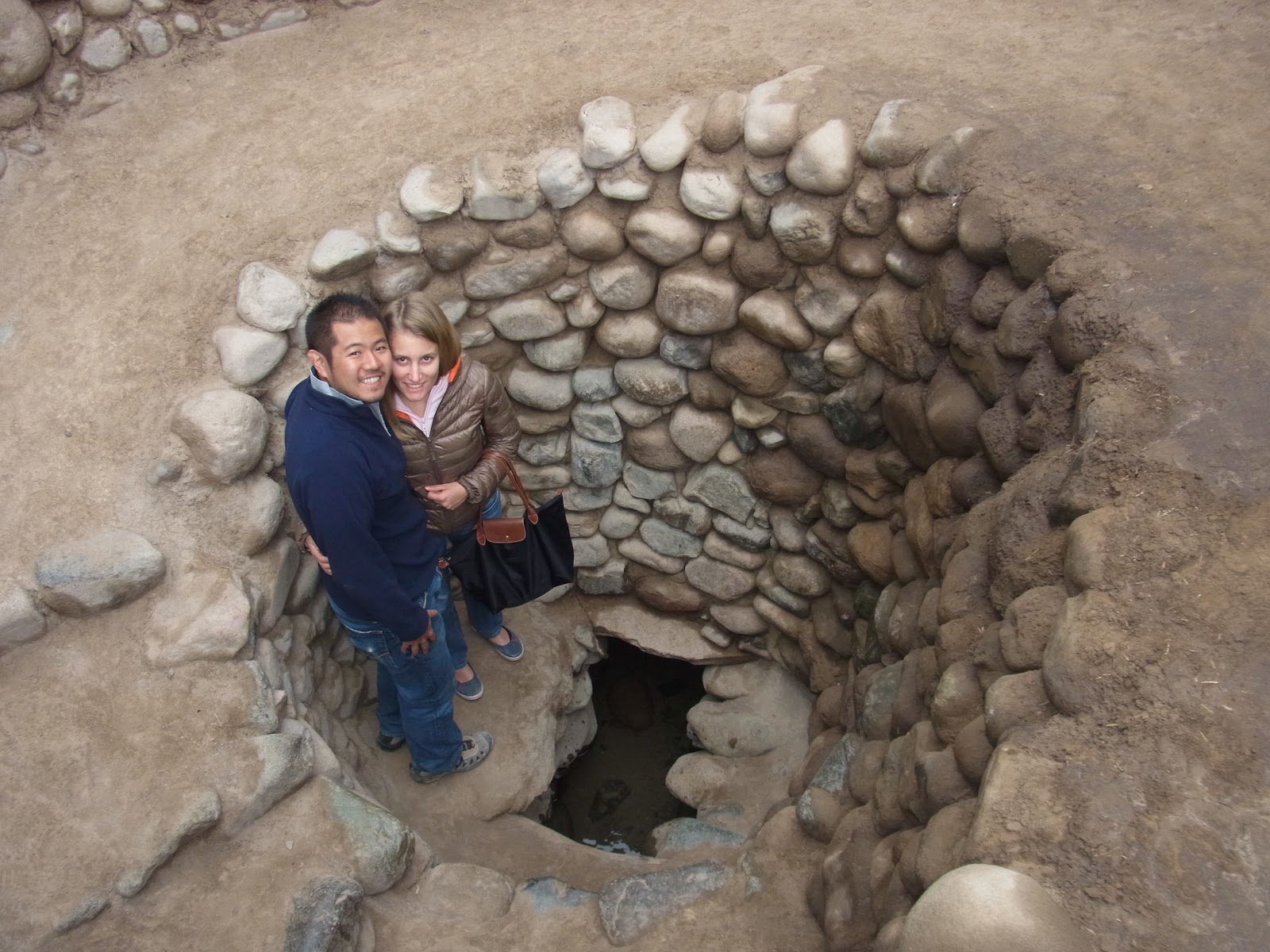
Got picked up at 8am. Interoceanic highway (East-west like Route 66). Going to the Aquaducts. 10-90cm. 16C. Clear water. Maintenance Oct/ Nov low water level. Spiral shape - inspection shape 20 just for one canal 10-20 meters between. 1500 years old. Nazca time. Cochinille looks like a white parasite, blood is used for lipstick and textiles.
Took the bus at 11am. Got back to Lima at 7pm.
Thursday, August 2
Last day in Lima. Had an early breakfast, caught a can into Central Lima. the cabby showed us the stadium and high court, he dropped us off at San Martin Place. We visited the cathedral and archbishop palace. Combento de Santo Domingo and San Francisco. We cut the tour short and visited the catacombs on our own. Headed back at 11:35 to meet with Maurice's mom, Rosa Amilia. Went to Real Philipe fortress and the gold museum. Had 2 hrs in Miraflores. Maurice and Marta picked us up at 19:45 for a last traditional Peruvian dinner. Carlos drove us to the airport at 22:00. We were upgraded to the first row in business class, perfect end to a perfect honeymoon. Excellent dinner and a good short sleep on the 6.5 hour flight. We checked out 3 business lounges in Atlanta, showered. My flight to Maine was first delayed because the aircraft wasn't working, then we had to go back to the gate because a flight attendant hit his head.
 |
| San Martin Place |
 |
| cathedral |
 |
| archbishop palace |
 |
| Combento de Santo Domingo |
 |
| San Francisco |
 |
| Real Philipe fortress |
 |
| Kobe burger |
 |
| good company and amazing peruvian food, what a send off |
 |
| Cheers! |